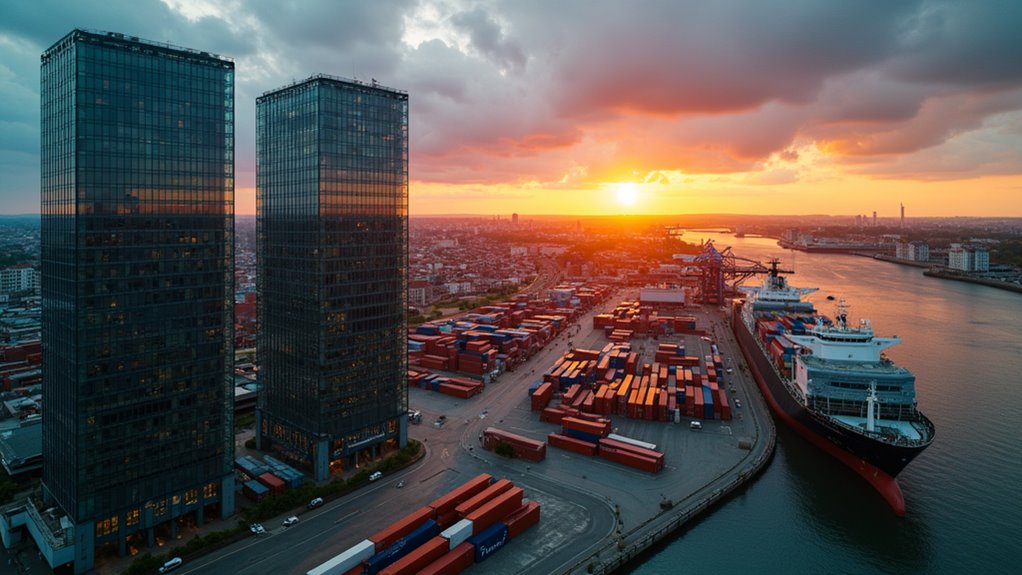

As trade tensions simmer between Brussels and Washington, Ireland finds itself perched on the edge of an economic precipice, its prosperity tethered to American goodwill like a kite dancing in unpredictable winds. The numbers tell a story that would make any economist reach for their strongest whiskey: over half of Irish goods exports flow westward across the Atlantic, creating a dependency so profound it makes teenage romance look stable by comparison.
The pharmaceutical sector, Ireland’s golden goose, faces particular peril. Those gleaming factories dotting the countryside from Cork to Dublin aren’t just manufacturing pills; they’re manufacturing prosperity that could evaporate faster than morning dew if American tariffs hit hard. Economic models suggest a potential 3% GDP loss by 2028, a figure that translates into real jobs, real mortgages, and real anxiety for thousands of families who’ve built their lives around these industries. With the pharmaceutical industry contributing €311 billion in GVA and 2.3 million jobs across the EU, Ireland’s slice of this pie represents not just numbers but national economic security.
But pharmaceuticals represent just one act in this unfolding drama. Ireland’s aviation leasing sector, managing 37% of the world’s commercial fleet from offices in Dublin’s financial district, watches nervously as potential tariffs on European aircraft loom. These aren’t abstract numbers on spreadsheets; they’re 10,000 aircraft managed by 50-plus companies that have made Ireland their global hub, drawn by tax advantages and strategic location. One wrong move in the trade war chess game, and this carefully constructed house of cards could tumble.
The ripple effects promise to be brutal. Unlike Germany or France, whose economies might absorb tariff impacts with the resilience of heavyweight boxers taking body blows, Ireland faces the prospect of a knockout punch. While Berlin might see a mere 0.4% GDP impact and Paris even less, Ireland’s open economy, that very openness that fueled its Celtic Tiger transformation, now renders it vulnerable as a lamb in wolf territory. The domino effect begins when tariffs act as taxes on imports, increasing costs for businesses and consumers throughout the economy.
Already, Irish businesses are front-loading exports like squirrels hoarding nuts before winter, temporarily inflating trade figures while everyone holds their breath. Investment decisions hang suspended in boardrooms across the country, creating the kind of uncertainty that makes Brexit look like a minor scheduling conflict. Supply chains, those invisible arteries of modern commerce, face disruption that could send costs spiraling and profitability plummeting. This economic uncertainty arrives as the tourism sector faces a visitor decline impact, with similar regions experiencing revenue losses of €88 million and visitor numbers plunging by 30%.
The government’s projections paint two futures: one where cooler heads prevail and growth continues its gentle slowdown, another where tariff escalation and retaliatory measures reduce annual growth to barely over 1% through 2027. That’s the difference between an economy jogging uphill and one crawling through mud.
For ordinary Irish citizens and, yes, for RTÉ broadcasting these economic tremors to living rooms nationwide, the implications are visceral. Higher prices at the grocery store, delayed expansions at local businesses, pension funds watching their pharmaceutical holdings with white knuckles. Ireland’s economic miracle, built on American investment and European integration, now faces its most serious test since the financial crisis, with its fate resting in conference rooms an ocean away.