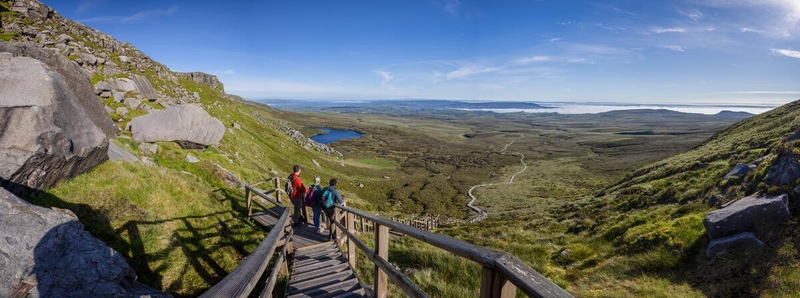
From ancient megalithic wonders to stoic medieval castles, Ireland’s landscape whispers tales of its rich, layered past—a tapestry woven with prehistoric monuments, early Christian retreats, and Georgian architectural marvels. Last year alone, an astounding 13.8 million visitors traversed these hallowed grounds, each footfall connecting present to past across the emerald isle’s storied terrain.
UNESCO-recognized treasures like Brú na Bóinne—with its remarkable megalithic art and 5,200-year-old passage tombs at Newgrange, Knowth, and Dowth—continue drawing crowds keen to witness winter solstice light penetrating ancient chambers (a spectacle worth the early-morning shiver, trust me). The site contains over 90 monuments across its ancient landscape, making it one of the most significant Neolithic complexes in the world.
Meanwhile, the remote Skellig Michael—that craggy Atlantic sentinel with its beehive huts clinging impossibly to rock—offers a glimpse into monastic life so extreme it seems otherworldly (yes, the same spot where Luke Skywalker brooded cinematically).
Dublin Castle emerged as 2024’s visitor champion, its State Apartments and exhibitions apparently irresistible to history buffs and casual tourists alike. Not to be outdone, Donegal Castle saw traffic spike 15%, while the ancient Corlea Trackway—an Iron Age wooden road mysteriously preserved in bog—experienced a 35% visitor surge, partly thanks to its proximity to Center Parcs (nothing says “family vacation” like combining water slides with Iron Age archaeology). The JFK Arboretum also flourished with a 22% increase in visitors seeking natural heritage experiences alongside historical sites.
Conservation efforts continue alongside this tourism boom—a delicate dance of accessibility and preservation. Modern technology now assists in protecting fragile ecosystems at sites like Skellig Michael, where limited daily visitors help maintain ecological balance.
Ireland’s tentative UNESCO nominations—including Dublin’s historic core and the impressive Western Stone Forts like Dún Aonghasa perched dramatically on Aran Islands cliffs—may soon join the heritage honor roll.
These sites reflect not just Ireland’s geologic makeup but its cultural DNA—stone walls and fortifications that have withstood centuries of Atlantic gales and human conflict, standing as proof of ancient engineering and Ireland’s enduring relationship with its rugged landscape.