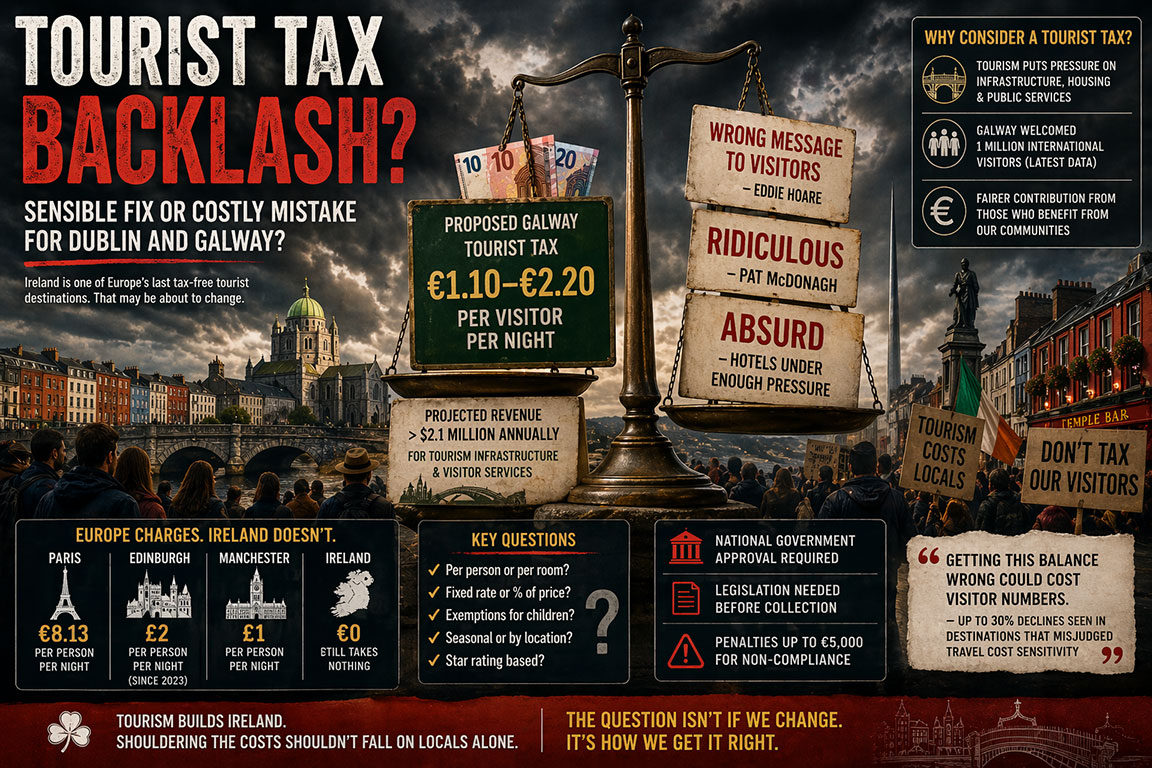
While Dublin’s Temple Bar district churns with tourist-packed pubs and prices that make Londoners wince, Ireland’s second city quietly maintains the authentic charm that the capital seems to have bartered away for international recognition. Cork, with its 224,000 residents and medieval bones, offers something increasingly rare in European tourism a place that hasn’t yet learned to perform itself for cameras.
The “Rebel City” earned its nickname centuries ago when locals backed the wrong horse during the Wars of the Roses, supporting the Yorkist cause with characteristic stubbornness. That independent streak still pulses through Cork’s veins. Walk through the Old Town, where fragments of medieval walls peek between modern storefronts like archaeological winks, and you’ll find locals who treat visitors as guests rather than walking ATMs. The River Lee winds through it all, flanked by Victorian-era buildings that frame the water like a perfectly aged photograph.
Cork’s medieval walls peek between modern storefronts like archaeological winks, while locals treat visitors as guests rather than walking ATMs.
The pace here moves differently, slower, maybe, but with purpose rather than Dublin’s caffeinated scramble between corporate meetings and overpriced lattes.
Money talks differently in Cork too. Where Dublin’s tourist zones have mastered the art of wallet extraction (a pint in Temple Bar now costs what your grandfather paid for a decent dinner), Cork maintains prices that won’t require a second mortgage. Street food vendors serve exceptional fare without the theatrical markup, and accommodation doesn’t demand choosing between your dignity and your credit score.
This economic sanity creates something unexpected: actual neighborhoods where locals still live, work, and drink alongside visitors without the bitter undertaste of resentment that seasons so many tourist-heavy cities.
Yet Cork isn’t Ireland’s only antidote to Dublin fatigue. Galway, self-proclaimed “Cultural Capital” without a trace of irony, buzzes with a different energy entirely. The city practically vibrates with festivals, its calendar so packed with cultural events that residents joke about needing festivals to celebrate the gaps between festivals. In 2020, Galway’s cultural credentials reached new heights as it served as European Capital of Culture, cementing its reputation beyond Irish borders.
Here, the Irish language isn’t just museum fodder but living speech, flowing naturally from shop conversations and pub banter. Bohemian without trying too hard (unlike certain Dublin quarters that curate their scruffiness), Galway attracts those seeking Ireland beyond the shamrock-shaped ice cubes and “authentic” Irish pubs designed by marketing committees.
Both cities share something Dublin increasingly lacks: breathing room. Not just physical space, though the absence of shoulder-to-shoulder tourist hordes helps, but psychological space to actually experience rather than simply consume a place.
Street performers in Galway play for joy as much as coins, while Cork’s laid-back atmosphere allows conversations to unfold naturally rather than being squeezed between selfie opportunities. The remarkable growth in rural tourism has allowed these authentic cultural experiences to flourish while simultaneously boosting local economies.
The irony isn’t lost on locals: Dublin, in its enthusiasm to become a “world-class” city, has succeeded perhaps too well, transforming into something generically international while Cork and Galway, content with their provincial status, remain stubbornly, wonderfully themselves.
For travelers exhausted by cities that have learned to monetize every cobblestone, these alternatives offer something radical, places that still remember how to be rather than just seem.