When you think of Ireland, you might picture rolling green hills, sheep-dotted pastures, and perhaps a pint of Guinness, but scattered across those picturesque landscapes like ancient sentinels stand the remains of over 30,000 castles, a staggering number that seems almost impossible until you consider the island’s turbulent history of invasion, conquest, and endless territorial squabbles.
The truth is, nobody can actually count them all, not for lack of trying, but because the very definition of “castle” becomes maddeningly slippery when you’re dealing with centuries of ruins. Does a crumbling tower house count? What about a barely-there foundation where a Norman fortification once stood? County records document only 724 structures, a laughably small fraction of the estimated total, which tells you everything about how subjective and chaotic this whole counting business really is.
The definition of “castle” becomes maddeningly slippery when dealing with centuries of ruins, making any accurate count essentially impossible.
The castle-building craze began in earnest with the Norman invasion of the 12th century, when motte-and-bailey structures evolved into imposing stone fortresses designed to project power and intimidate the locals. From there, it was fundamentally an arms race, with waves of construction followed by waves of conquest, with everyone from Norman barons to English colonizers erecting defensive structures to protect their wealth, collect taxes, and maintain control over their hard-won territories.
The late medieval period brought square and circular towers with walls thick enough to withstand siege warfare, while the 15th through 17th centuries saw tower houses sprouting up like defensive mushrooms across the countryside. These castles were built primarily for defense rather than luxury, reflecting the constant threat of warfare and the need for fortification.
Cork leads the pack with 116 documented castles, followed by Dublin‘s 68, though these numbers feel almost quaint compared to the thousands lurking in various states of decay throughout the island. Some like Blarney Castle with its tourist-magnet stone, or Dublin Castle with its centuries of symbolizing English rule, remain intact and celebrated.
Others, like the Game of Thrones-famous Dunluce Castle perched dramatically on coastal cliffs, exist as romantic ruins that probably look better in photographs than they ever did when people actually had to live in them.
The preservation status varies wildly. Solid construction and sheer luck have kept many standing, but thousands have succumbed to time, abandonment, or deliberate destruction. These rich cultural heritage sites are now major attractions drawing history enthusiasts from around the world. Conservation groups work to protect what remains, though some castles sit on private land, inaccessible and forgotten. Numerous lesser-known castles remain privately owned or inaccessible, hidden away from the tourist trails and guidebooks. Ireland has historically underexploited its castle-tourism potential, a missed opportunity considering how people seem unable to resist a good ruin with a dramatic backstory.
The counting problem persists because no thorough modern survey exists, and probably never will. Too many structures have vanished completely, too many definitions overlap and contradict, and frankly, after a certain point, does it matter whether it’s 30,000 or 35,000?
What matters is that Ireland’s landscape tells a story written in stone of invasion and resistance, power and paranoia, ambition built into walls that would, inevitably, crumble.
Exploring Ireland’s Most Memorable Castles: Where to Go, Stay & Dine
Ireland’s castles aren’t just relics dotting the countryside; they’re vibrant destinations where history, hospitality, and unforgettable experiences come together. From luxurious castle-hotels to dramatic ruins perched on rugged shores, here’s how to make the most of your castle tour.
Slane Castle — History, Whiskey & River Views
Just under an hour from Dublin, Slane Castle sits majestically in the Boyne Valley and is one of Ireland’s most storied estates. Tours take visitors through the castle’s 18th-century interiors and sweeping grounds, where you’ll uncover tales of the Conyngham family and the legendary rock concerts that have echoed across its lawns. On-site experiences also include the Slane Distillery Visitor Centre, walking trails through scenic countryside, and relaxed café-style treats in the courtyard.
👉 Where to stay: Slane Castle offers historic apartments within its walls for larger groups and families, or Rock Farm on the estate provides luxury glamping and holiday lets surrounded by farmland and nature.
👉 Where to eat: Slane offers a variety of dining experiences, from casual cafes and traditional pubs to upscale restaurants, with popular options including
Ashford Castle — Luxury & Adventure in the West
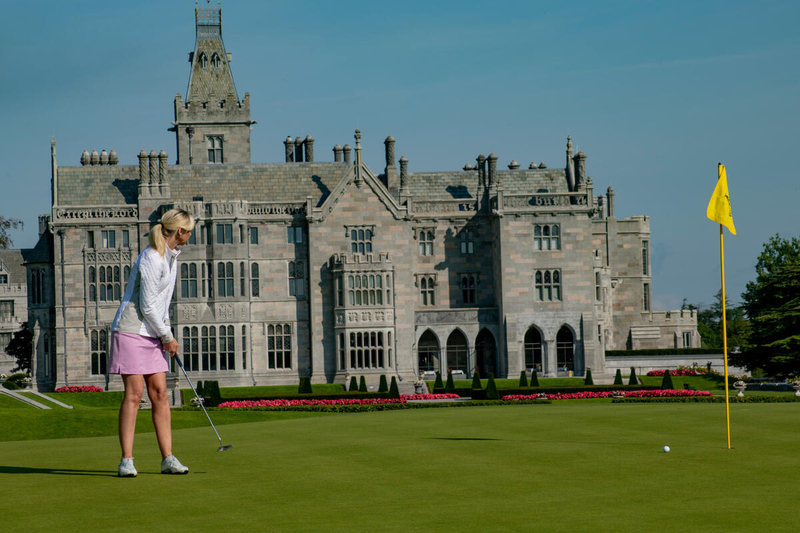
In County Mayo, Ashford Castle is consistently ranked among Ireland’s most luxurious castle stays. Dating back to the 13th century, this five-star estate on Lough Corrib now combines historic ambiance with modern indulgences: think sumptuous spa treatments, falconry experiences, boating, and fine dining in the George V Restaurant or the atmospheric Dungeon Bar.
Where to stay: Overnight in elegant castle suites for a true fairytale experience.
Where to eat: Beyond the restaurants on site, nearby Cong village offers cozy local pubs for lunch or a pint after exploring the lake.
Kilkenny Castle — A Medieval Jewel in the Medieval Mile
In the heart of Kilkenny city, Kilkenny Castle has guarded the River Nore since the late 12th century and has been carefully restored to showcase elegant interiors, portraits, and sweeping parklands. It’s a must-see for history buffs with plenty of activities and seasonal events.
Where to stay: Butler House — a boutique historic inn just steps from the castle, or cozy mid-range hotels like Kilford Arms.
Where to eat: Ristorante Rinuccini offers Italian-inspired dining close to the castle, while Kilkenny’s vibrant food scene includes gastropubs and traditional Irish fare.
Blarney Castle — Kiss the Stone & Wander Enchanted Gardens
No castle crawl is complete without a visit to Blarney Castle in County Cork. Famous for the legendary Blarney Stone, which is said to grant the gift of gab, this 15th-century fortress also features extensive gardens, a poison garden, caves, and woodland walks.
Where to stay: Blarney Castle Hotel offers convenient, castle-adjacent lodging.
Where to eat: Local pubs and cafés in Blarney village serve everything from hearty Irish breakfasts to relaxed evening meals.
Other Castles to Add to Your Irish Itinerary
-
Trim Castle, Co. Meath: One of Ireland’s largest Norman castles; excellent for photography and strolls around its battlements.
-
Ross Castle, Killarney: A restored 15th-century stronghold on Lough Leane with scenic guided tours.
-
Malahide Castle, Co. Dublin: Set within extensive parklands; fantastic for families and short day trips.
-
Dublin Castle: In the capital, this historic administrative centre combines medieval architecture with state apartments and museums.
Each of these castles sits within reach of excellent accommodation and dining options, from charming B&Bs and boutique hotels to traditional pubs with hearty Irish fare, making them ideal for multi-day explorations.