While Northern Ireland’s celebrated attractions often draw visitors to Belfast’s urban landscape or the Giant’s Causeway’s geological marvels, the Fermanagh Lakelands remain a surprisingly overlooked natural wonder—a watery domain where time seems to pause among rippling reflections. This liquid landscape, where approximately 30% of the terrain is covered by lakes and waterways, offers a patchwork quilt of experiences that somehow evades the tourist radar despite its breathtaking appeal.
Fermanagh’s veiled aquatic tapestry invites discovery beyond the beaten path of Northern Irish tourism.
The region’s centerpiece, Lough Erne—comprising Upper and Lower segments like aquatic siblings separated at birth—cradles roughly 154 islands within its glacial embrace. These aren’t just ordinary islands but drowned drumlin hills, sculpted by ice ages and now home to treasures both natural and historical. Devenish Island, arguably the crown jewel, hosts monastic ruins from Saint Molaise’s 6th-century settlement, including a round tower that stands like a stone sentinel guarding centuries of prayers.
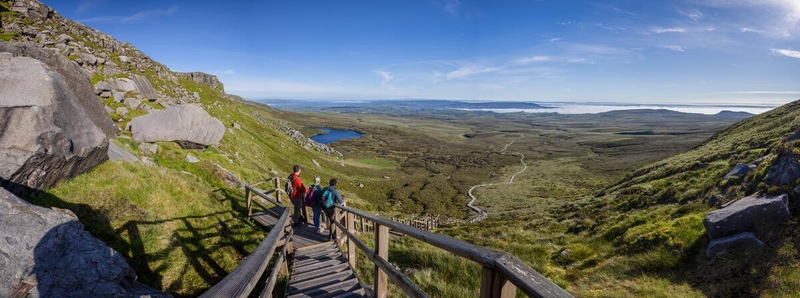
Bordered by the Republic of Ireland on three sides and Northern Ireland’s Dungannon and Omagh districts to the northeast, Fermanagh exudes a certain geographical liminality—neither fully here nor there—which seems fitting for a place where land and water engage in constant negotiation. The terrain rises dramatically from the lakeshore to reach 2,188 feet at Cuilcagh mountain, creating microclimates and habitats as varied as the gneiss, limestone, and metamorphic rocks that form its foundation. Visitors can experience the unique phenomenon of a county with abundant waterways but no coastline, making it a true inland water wonderland. The area boasts numerous limestone caves throughout the region, adding another dimension to its geological marvels.
For those weary of Instagram-famous landscapes, Fermanagh offers something invigoratingly authentic. One can kayak through morning mist, letting fingers trail through water that reflects clouds with perfect fidelity, or contemplate the ancient Janus figure on Boa Island—the same stone face that captivated poet Seamus Heaney.
The two-headed Celtic idol stares simultaneously into past and future, much like Fermanagh itself—a place where 2,000-year-old stone figures on White Island exist alongside modern festivals celebrating this watery wonderland’s enduring appeal.