
Tucked along Ireland’s windswept Dingle Peninsula, where the Atlantic crashes against ancient cliffs with the kind of relentless poetry that makes you understand why people once believed the world ended here, a serene town in County Kerry has caught the discerning eye of a prominent travel expert.
While crowds elbow past each other in Dublin’s Temple Bar or queue for Cliffs of Moher selfies, she’s suggesting something different, a place where the Wild Atlantic Way reveals itself not through Instagram filters but through the genuine creak of a pub door and the salt-thick air that settles on your skin like a second layer.
The town sits in a Gaeltacht region, where Irish flows as naturally as Guinness at the local sessions, and traditional music isn’t performed for tourists but simply exists because that’s what happens when neighbors gather.
There’s something almost defiant about this preservation of culture, not museum-piece nostalgia, but living, breathing heritage that doesn’t particularly care whether you find it charming or not.
What makes the expert’s endorsement particularly remarkable is the town’s deliberate rejection of the tourist-trap playbook. Instead of inflatable leprechauns and “Kiss Me, I’m Irish” mugs, you’ll find artisan shops selling actual crafts made by actual people, cozy guesthouses where breakfast conversations might veer into local fishing disputes or weather predictions that prove eerily accurate, and restaurants serving regional cuisine because that’s what grows here, not because some marketing consultant decided it was authentic enough.
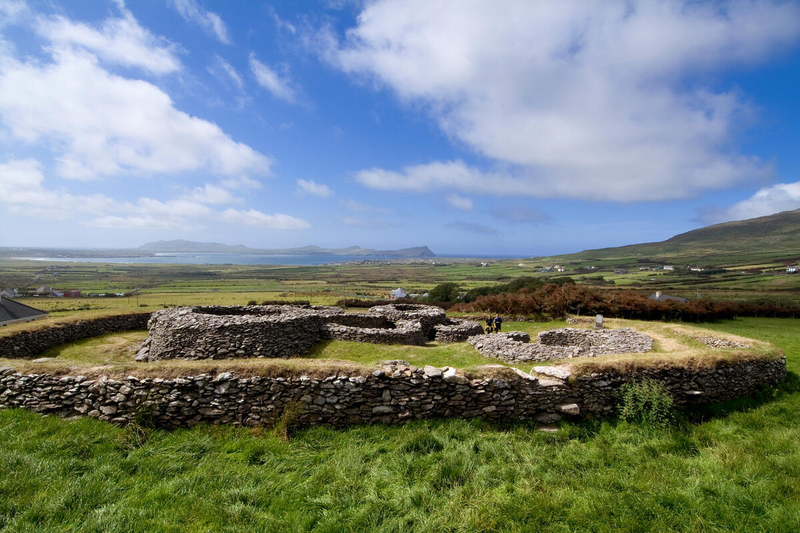
The landscape does the heavy lifting. Slea Head Drive winds through scenery so dramatic it borders on theatrical, those ancient beehive huts called clocháns perched on hillsides like they’re testing gravity, coastal cliffs dropping into waters that shift from slate to emerald depending on cloud cover and mood.
Boat tours offer wildlife sightings (dolphins, seals, the occasional puffin looking mildly annoyed by the attention), while hiking trails provide the kind of solitude that’s becoming increasingly rare in our aggressively connected world.
The pace here operates on a different frequency. It’s not lazy, there’s plenty happening between festivals, music sessions, and the daily rhythms of a working community, but it’s decidedly unhurried.
The kind of place where weather conversations aren’t small talk but legitimate meteorological assessments, where late spring through early autumn offers the best visiting conditions, but even rain carries a certain moody appeal. With over 50 pubs scattered throughout, the town somehow manages to average one drinking establishment for every 40 residents, creating an almost mathematically improbable density of places where locals gather for conversation and music.
Maybe the travel guru is onto something because this town offers what so many popular destinations have commodified away: genuineness without performance, beauty without branding, tradition without pantomime. Not far from here, the Cliffs of Moher continue to draw massive crowds seeking that dramatic meeting of sea and sky, proving the enduring appeal of Ireland’s natural wonders even as more discerning travelers seek quieter alternatives.
Travelers would be wise to book accommodations well in advance if visiting during the summer months, as the peninsula’s charm has not gone entirely unnoticed by savvy tourists seeking authentic experiences.
It’s ideal for travelers tired of fighting through crowds to glimpse something authentic, for families wanting experiences beyond souvenir shops, for anyone suspecting that the best destinations are the ones not yet overrun by people seeking the best destinations.
The irony isn’t lost; recommendations like this threaten the very qualities they celebrate, but for now, at least, the town remains invigoratingly itself.
And so, if that travel guru has indeed stumbled upon something quietly extraordinary on the Dingle Peninsula, it’s not because the region shouts for attention; it never has. It’s because this rugged corner of Kerry rewards the travelers who slow down long enough to notice the details: the wind carving patterns in the dunes, the low murmur of Irish drifting from a pub doorway, the sheep pausing on a hillside as if deciding whether you’re worth acknowledging.
For those willing to follow that slower rhythm, the peninsula offers far more than its postcard moments. Beyond the headline sights lie places where time pools in unexpected pockets: a brewery hidden inside an old pub, a medieval churchyard humming with stories, beaches that belong entirely to the weather, and cliffs that stage their own private theatre of waves and light.
Below, you’ll find a curated list of things to do across this windswept landscape, from the iconic to the quietly magical. They’re not just attractions, but invitations to wander, to listen, and to let this remarkable place work its way under your skin in the way only truly authentic destinations can.
Things to Do on the Dingle Peninsula
- Drive the Slea Head Loop
- Why go: This is the quintessential scenic drive on the peninsula dramatic Atlantic cliffs, sea views, and many of the peninsula’s top historic and natural sights. Rambles with Rachel+2Forget Someday Travel Blog+2
- Highlights on the route:
- Beehive Huts (Clocháns): Particularly the Fahan Beehive huts, early drystone structures perched dramatically with ocean views. dinglesleaheadtours.com
- Coumeenoole Beach: Stunning but wild, great for cliff-top photos rather than swimming (currents can be dangerous). Rambles with Rachel
- Dunquin Pier: A very photogenic pier, historically used by islanders who rowed to the Blasket Islands. Forget Someday Travel Blog
- Eask Tower: Built to guide ships safely into Dingle Harbour climb up for panoramic views over the harbour, the Blasket Islands, and more. Wikipedia+1
- Visit the Blasket Centre
- What it is: A heritage and cultural centre in Dún Chaoin (on the Slea Head Drive) that tells the story of the Blasket Islands, their community, literature, and life at the edge of the world. blasket.ie+2blasket.ie+2
- Practical info:
- Admission is around €5 for adults. Heritage Ireland
- There’s a café, a bookshop, a clifftop viewing platform, and interactive exhibits. Scenic Kerry+1
- The centre is seasonally open; check before visiting. Heritage Ireland
- Why it fits your piece: It’s a living monument to Gaeltacht culture, storytelling, and the resilience of a remote community.
- Explore Gallarus Oratory & Gallarus Castle
- Gallarus Oratory: A remarkably well-preserved early Christian stone church built in a boat-like shape, very atmospheric and peaceful. Justin Plus Lauren+1
- Gallarus Castle: Nearby, a 15th-century tower house belonging to the Knights of Kerry. Wikipedia
- Dunbeg Fort
- What it is: An Iron Age promontory fort on the cliffs, overlooking the Atlantic. Wikipedia
- Why it’s worth it: The fort gives a sense of ancient defensive architecture, and nearby is also a large beehive hut, really evocative of old Ireland. XYUandBEYOND+1
- Conor Pass Scenic Drive
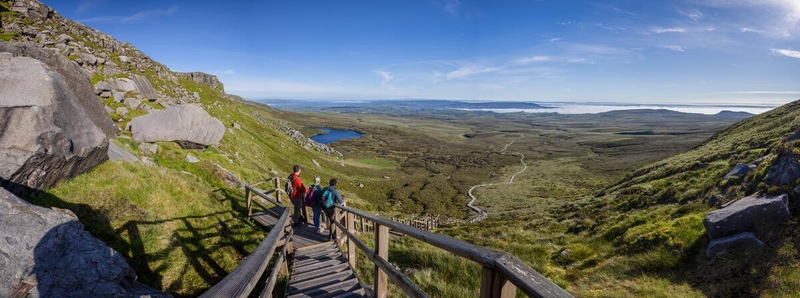
- Why go: One of the most dramatic mountain passes in Ireland. The road is narrow, winding, and offers breathtaking views down to lakes, corrie walls, and across Dingle Bay. Dingle Peninsula+1
- Key views:
- Pedlar’s Lake (Lough Doon): A glacial corrie lake with a small waterfall. There’s a rock-scramble path for a vantage point. Dingle Peninsula
- Summit car park viewpoint: From here, you can look north to Kerry Head and south to the Ring of Kerry / Skelligs on clear days. Castlewood House Dingle
- Note: Vehicles over ~2 tonnes are not allowed on the pass, due to the road’s narrowness. Dingle Peninsula
- See an Ogham Stone
- Ballybowler North Ogham Stone: Located near Conor Pass. It’s a primitive Irish inscription that offers a tangible link to early medieval Ireland. Wikipedia
- Why it’s cool for your article: Perfect for underscoring the timelessness of this place carving on stone, language, and landscapes that feel unchanged.
- Hike (or Walk) on the Peninsula
- Dunmore Head hike: From Coumeenoole / Slea Head, you can do a loop walk to Dunmore Head, one of the westernmost points on the peninsula. Rambles with Rachel
- Walking tours with locals: Some guided walking tours combine cliff walks, heritage (like Kilmalkedar Church), and lamb-farm visits. dinglesleaheadtours.com
- Gaeltacht Culture & Music
- While not a single “site,” simply spending time in the Gaeltacht villages (e.g., Dún Chaoin, Ventry) is a cultural experience: Irish language, traditional music, local pubs.
- If your travel expert’s piece emphasizes “living heritage,” this is the core of the language, the daily rhythms, the small-town conversations.
Important Seasonal Notes (for this Time of Year)
- Some attractions may have limited hours outside peak tourist season check local websites (e.g., Blasket Centre closes seasonally). Heritage Ireland
- Weather can be very changeable: winds, rain, and mist can impact visibility, especially on drives like Conor Pass, but that moody, atmospheric quality can amplify the “wild” feel of the peninsula.
- Driving some roads (like Conor Pass) requires caution, narrow bends, and passing places.
5 Hidden Gems on the Dingle Peninsula
1. Tig Bhric & West Kerry Brewery (Ballyferriter)
What makes it special:
Ireland’s first microbrewery is in a small, atmospheric, and utterly local pub. You drink beside the brewing tanks in a cozy Gaeltacht pub that feels unchanged in decades.
Experience: Try their seasonal beers, chat with locals, and if you’re lucky, catch a spontaneous music session.
🔗 https://westkerrybrewery.ie
2. Kilmalkedar Church & the Alphabet Stone
What makes it special:
An early medieval church site tucked into the countryside, surrounded by ogham stones, a sundial, ancient graves, and a mysterious upright stone known as “The Alphabet Stone.”
Experience: Zero crowds, huge atmosphere, and the sense that you’ve stepped into a sacred space that has survived more than a millennium.
🔗 https://dingle-peninsula.ie/explore/kilmalkedar-church
3. Ventry Beach in the Off-Season
What makes it special:
While summer draws families, the cooler months belong to photographers, dog-walkers, and locals getting fresh Atlantic air. It’s long, quiet, and wind-battered in the best way.
Experience: Walk the full strand with the mountains behind you and the Atlantic roaring ahead, the kind of solitude your article describes.
🔗 https://dingle-peninsula.ie/explore/ventry
4. Hold a Baby Lamb at a Local Farm (Slea Head)
What makes it special:
An authentic farm experience, no gimmicks. You’ll meet local farmers, hear Irish spoken naturally, and get a close-up look at the region’s traditional sheep farming.
Experience: Many small farms offer seasonal lamb-holding, sheepdog demos, or shearing chats (not formally advertised).
🔗 https://www.dinglesleaheadtours.com/tour/petting-sheep-experience (one of the few with info)
5. Clogher Head & Clogher Beach
What makes it special:
Less visited than Dunquin or Coumeenoole but just as dramatic. Waves explode against the rocks, the Blasket Islands float offshore, and the cliffs offer cinematic views without the traffic of Slea Head.
Experience: A short hike gives you ridge-top views of the Sleeping Giant (Inis Tuaisceart) and enormous Atlantic swells.
🔗 https://rambleswithrachel.com/things-to-do-on-the-dingle-peninsula/#clogher-head