Why anyone would choose to navigate Ireland’s serpentine roads, where sheep have right of way and GPS estimates are more wishful thinking than fact, remains one of travel’s great mysteries, yet thousands of visitors annually subject themselves to this particular brand of automotive adventure.
The rental car agent at Dublin Airport handed over the keys with what could only be described as a sympathetic smirk, knowing full well that Google Maps‘ optimistic driving times bore no resemblance to reality on roads barely wide enough for medieval donkey carts. The wisdom of purchasing Super CDW with zero deductible became apparent before even leaving the airport grounds, watching other renters navigate the roundabout like startled deer.
Google Maps’ driving times in Ireland exist somewhere between fiction and outright fantasy.
The journey from Dublin to Kilkenny should have taken ninety minutes. It took nearly three hours, not because of traffic unless one counts the aforementioned sheep, but because Ireland’s secondary roads twist through the landscape like ribbons dropped by a careless giant.
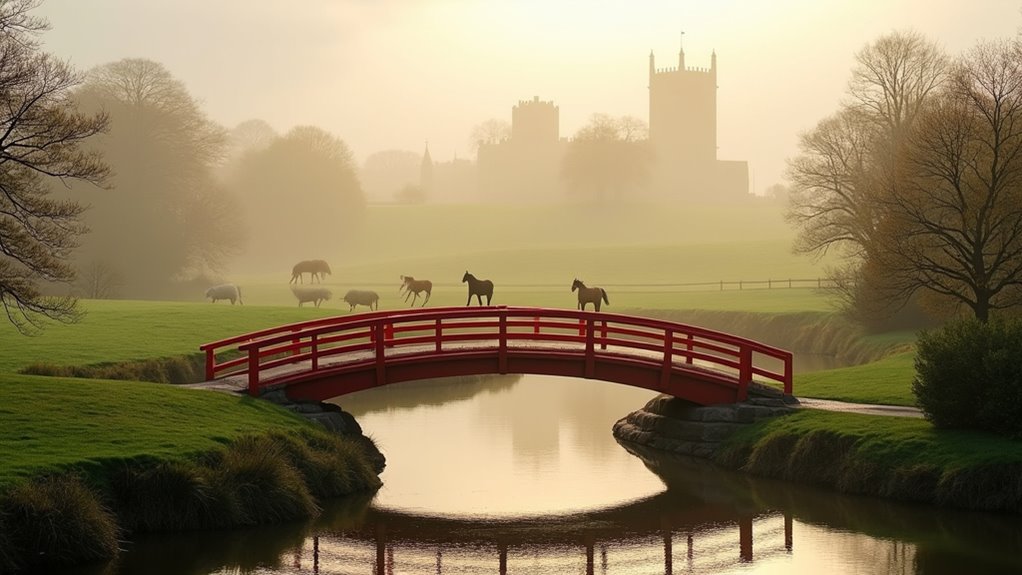
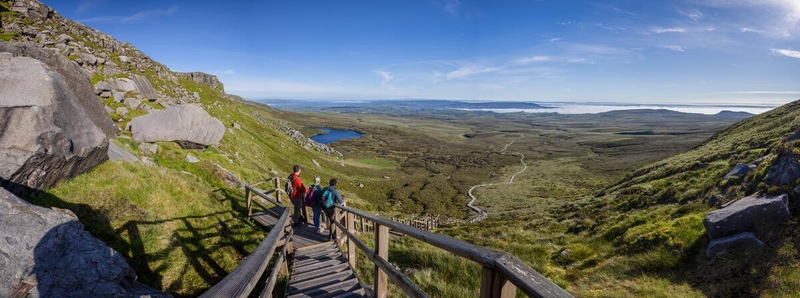
The Wicklow Mountains rose ahead, their peaks shrouded in mist that transformed the windshield into an impressionist painting. At Glendalough, where sixth-century monks once sought silence, tour buses disgorged their cargo with mechanical precision, smartphones raised like modern prayer books toward the ancient stone towers. The elevation here reaches 476 meters above sea level, the highest point on the entire route.
Averaging forty miles per hour sounds leisurely until one realizes this means white-knuckling the steering wheel while locals in weathered Toyotas rocket past on roads that would qualify as hiking trails elsewhere.
The drive from Galway to Doolin stretched into two hours of negotiating hairpin turns while the Atlantic hurled itself against cliffs with theatrical violence. Between these cities sits a millennium-old pub that has served kings and survived the Dark Ages, offering weary travelers a traditional respite from the road. The Wild Atlantic Way‘s 1,550 miles of coastline promised tranquility; it delivered vertigo and the constant fear of scraping rental car paint against stone walls erected when Cromwell was still a concern.
Between Doolin and Killarney, the fuel gauge dipped toward empty, a reminder that planning stops matters when covering distances that would span entire countries elsewhere.
The 2,300-kilometer circuit touching every county demands thirty-five hours of actual driving, though this estimate assumes one doesn’t stop to photograph every photogenic ruin (impossible) or sample every village pub’s interpretation of brown bread (inadvisable but inevitable).
The supposed quietude never materialized. Instead, there were narrow lanes where oncoming tractors required automotive ballet, villages where directions came in the form of “turn left at Murphy’s old place not the new Murphy, mind you,” and coastal stretches where the wind screamed louder than any meditation app’s ocean sounds.
Cork to the Rock of Cashel delivered both medieval grandeur and the realization that Irish distances exist in their own temporal dimension, where ninety minutes means whatever the roads decide it means.
What remains after 1,430 miles isn’t silence but something more valuable: the understanding that Ireland’s roads don’t lead to tranquility but through it, past stone-studded fields and Atlantic-battered headlands, through villages where time moves at tractor speed, toward the peculiar peace found in surrendering to the journey’s own logic or magnificent lack thereof.