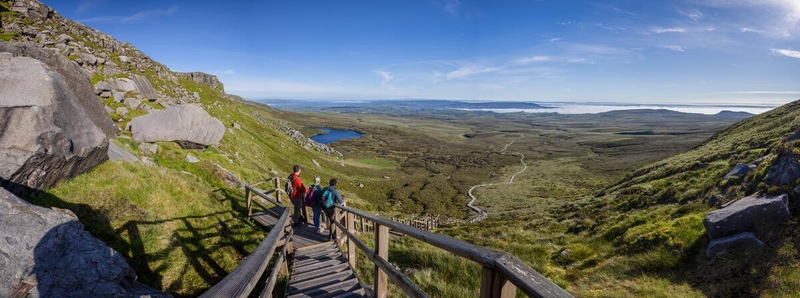
Where else but Ireland could a seemingly ordinary hill conceal the entrance to an ancient fairy domain—a place where mythology and reality dance together in an eternal, misty embrace? The Irish landscape isn’t merely scenic; it’s alive with stories that have survived millennia, whispered between generations by revered seanchaithe who kept cultural memories intact when written records were scarce.
These storytellers spoke of the Tuatha Dé Danann—supernatural beings who retreated into the hills to become the Sidhe when Christianity swept across the emerald isle. Their tales weren’t just entertainment but survival manuals disguised as folklore. Even today, farmers plow around fairy forts rather than risk the wrath of these otherworldly neighbors—a peculiar blend of Catholic reverence and pagan superstition that defines Ireland’s spiritual complexity. The goddess Ériu, from whom Ireland’s name derives, represents this deep connection between the land and its mythological heritage.
Ancient wisdom flows beneath Ireland’s surface where old gods linger and farmers still honor their invisible neighbors.
The landscape itself serves as a physical manifestation of these ancient narratives. The Giant’s Causeway isn’t merely a geological wonder but the remnant of a bridge built by the legendary giant Fionn mac Cumhaill—science and mythology coexisting in the Irish mind without contradiction. This duality persists throughout the island, where Christian saints borrowed the magical powers of their pagan predecessors, and where holy wells remain sites of both orthodox prayer and ancient ritual.
Ireland’s extraordinary Schools’ Manuscripts Collection—with its million-plus pages of folklore gathered in the late 1930s—reveals how deeply these beliefs penetrated everyday life. Children documented neighbors’ encounters with banshees and leprechauns alongside practical knowledge about butter-churning and weather prediction, creating an unparalleled archive of rural wisdom. Time in these collected stories often behaves differently, with a single night spent in fairy revelry potentially equaling an entire year in the human world.
What distinguishes Irish folklore isn’t just its fantastical elements but its profound connection to identity and resistance. During centuries of colonization, these stories preserved a distinctly Irish consciousness when political autonomy was impossible. The tales morphed and adapted—much like the shapeshifting creatures they described—ensuring their survival through famine, emigration, and modernization.
In Ireland, the past isn’t dead; it’s merely waiting beneath the nearest fairy hill.