While most European travelers have long grown accustomed to seeing a modest tourism surcharge tacked onto their hotel bills, a quiet, almost invisible acknowledgment that visiting somewhere beautiful isn’t entirely free, Ireland remains a curious holdout, a kind of tax-free sanctuary in a continent increasingly comfortable with the practice.
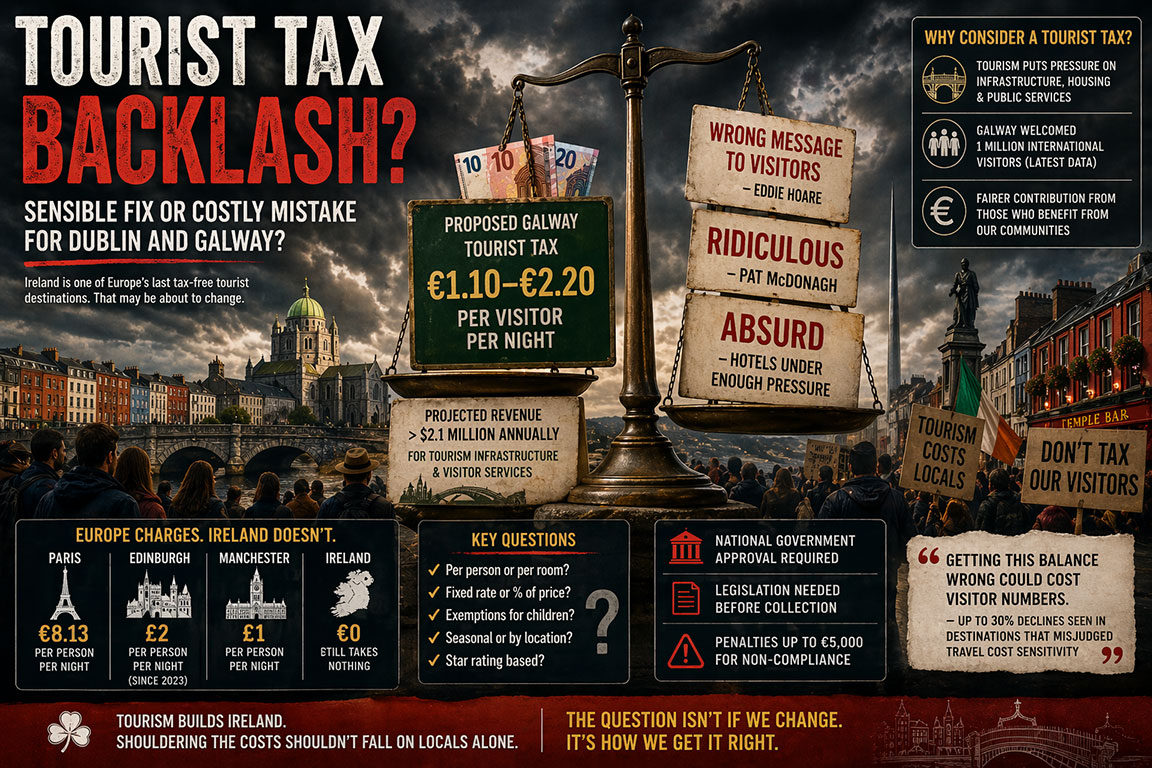
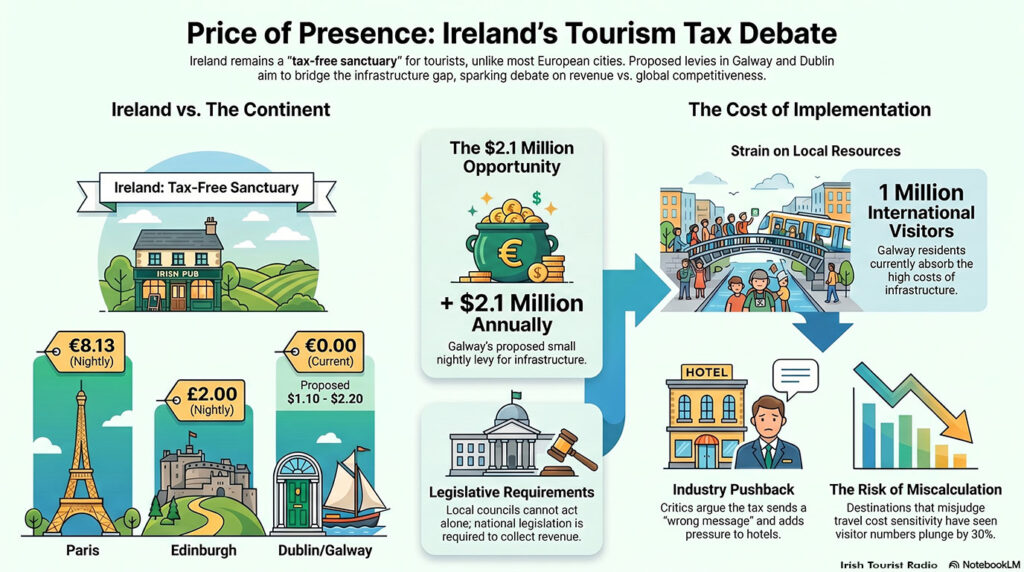
Paris charges up to €8.13 per person per night. Edinburgh introduced £2 per head in 2023. Even Manchester hardly a city dripping in ancient mystique collects £1 from visitors staying in city-centre hotels. Ireland, meanwhile, charges nothing.
Paris takes €8.13 per night. Edinburgh takes £2. Manchester takes £1. Ireland, somehow, still takes nothing.
That might change, at least partially. Galway City Council explored a proposal in 2024 that would slap an accommodation charge of roughly $1.10 to $2.20 per visitor per night on hotels and short-term lodging.
The numbers aren’t dramatic, nobody’s skipping Galway over two dollars, but the projected annual revenue could exceed $2.1 million, ringfenced specifically for tourism infrastructure and visitor services. Not bad for a city whose hotel industry apparently generates commercial rates of €100,000 per bedroom annually in Dublin, suggesting the hospitality sector isn’t exactly scraping by.
Here’s the catch, though: Galway can’t simply decide this on its own. National Irish government approval is required, along with specific legislation, before a single euro gets collected. Local authorities would receive assigned revenue only once the legal framework exists.
Penalties for non-compliance could reach €5,000 for unregistered properties, which sounds stern until one remembers that enforcement mechanisms are only as strong as the political will behind them.
Design questions multiply quickly. Should the levy apply per person or per room? Fixed rate, say, €3 per night, or variable, like 3% of the accommodation price? Should children under 18 receive exemptions, as they do in France?
Should rates shift by season, location, or star rating? Each decision carries consequences, and none of them are purely technical. They reflect choices about who tourism is for and who should bear its costs.
Opposition hasn’t been shy. Former Galway mayor Eddie Hoare argued the tax sends the wrong message to visitors. Supermac’s founder Pat McDonagh called the proposal outright ridiculous.
A suggested €5 tourist tax for Dublin drew similarly sharp language, absurd, critics said, piling pressure onto hotels already managing brutal operating costs.
Their frustration is understandable, even if the math is harder to sympathize with entirely. Tourism generates enormous demand on infrastructure, housing markets, and public services costs that locals absorb, whether visitors acknowledge them or not. Galway alone welcomed 1 million international visitors in recent data, a figure that underscores just how significant the strain on local resources has become.
Framing a $2 nightly charge as a catastrophic deterrent strains credibility when Paris, Edinburgh, and Manchester continue attracting millions despite their surcharges. The stakes of getting this balance wrong are real, however, as visitor numbers have plunged by as much as 30% in destinations that misjudged the sensitivity of travel costs against geopolitical headwinds.
Ireland’s reluctance isn’t irrational; it reflects genuine anxiety about competitive positioning. But in a continent where tourist taxes have become standard furniture, Ireland’s continued absence from that conversation looks less like principled restraint and more like procrastination. In the meantime, short-term rental properties in Ireland have been required to register with Fáilte Ireland since 2022, signaling that regulatory appetite for the sector is already well established.