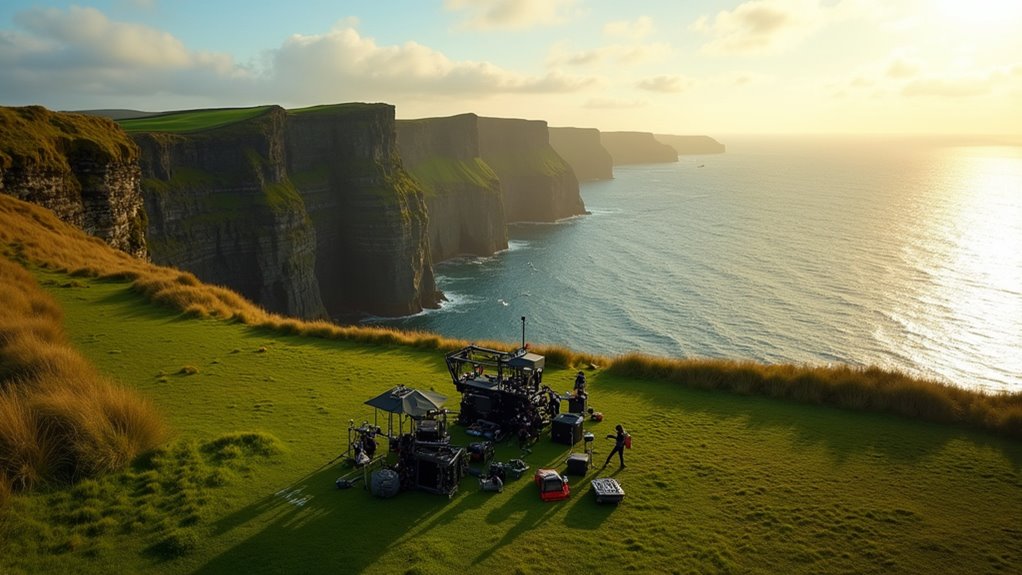

While Los Angeles has long reigned as the epicenter of global filmmaking, Ireland’s emerald shores are increasingly luring production companies away from the California sun. The financial math behind this migration isn’t complicated—Ireland’s Section 481 tax credit offers filmmakers a refundable credit of up to 32%, a proposal that Hollywood bean-counters find impossible to ignore in an era of ballooning production costs.
Hollywood’s reign is fading as Ireland’s tax incentives transform Emerald shores into filmmaking’s new promised land.
The Irish government has masterfully positioned itself as a filmmaker’s haven, not just through tax incentives but by cultivating an ecosystem where creativity thrives without breaking the bank. Production costs—from equipment rental to location fees—typically run lower than their LA counterparts, creating a compelling financial case for studios watching their bottom lines.
Gone are the days when “cheaper” meant “lesser quality.” Ireland’s film infrastructure has matured dramatically, hosting everything from indie darlings to blockbuster behemoths with equal aplomb. As Rob Lowe recently noted, bringing 100 Americans to Ireland is more economical than filming at Fox Studios in Los Angeles.
The regulatory landscape—often the bane of producers everywhere—presents another Irish advantage. While American productions navigate the labyrinthine demands of guilds and unions (with their attendant cost implications), Irish productions benefit from more flexible frameworks without sacrificing quality or fair treatment. The reduced red tape doesn’t hurt either; setting up shop requires fewer bureaucratic hurdles than in the States.
Perhaps most remarkable is the human element—Ireland boasts crews whose technical expertise rivals Hollywood veterans, often at more competitive rates. These professionals bring not just skills but a collaborative culture that production managers describe as “refreshingly drama-free” compared to some Hollywood sets.
This combination—technical prowess and pleasant working relationships—translates to efficiency that further stretches budgets. The Irish film industry’s commitment to a humane working environment stands in stark contrast to the profit-driven, efficiency-first approach often seen in Hollywood.
The global film market has noticed. International productions flowing into Dublin, Galway, and beyond have created a virtuous cycle—more productions attract more talent, infrastructure improves, and Ireland’s position strengthens.
For producers facing the financial realities of modern filmmaking, the question increasingly isn’t why move to Ireland, but why haven’t they already.