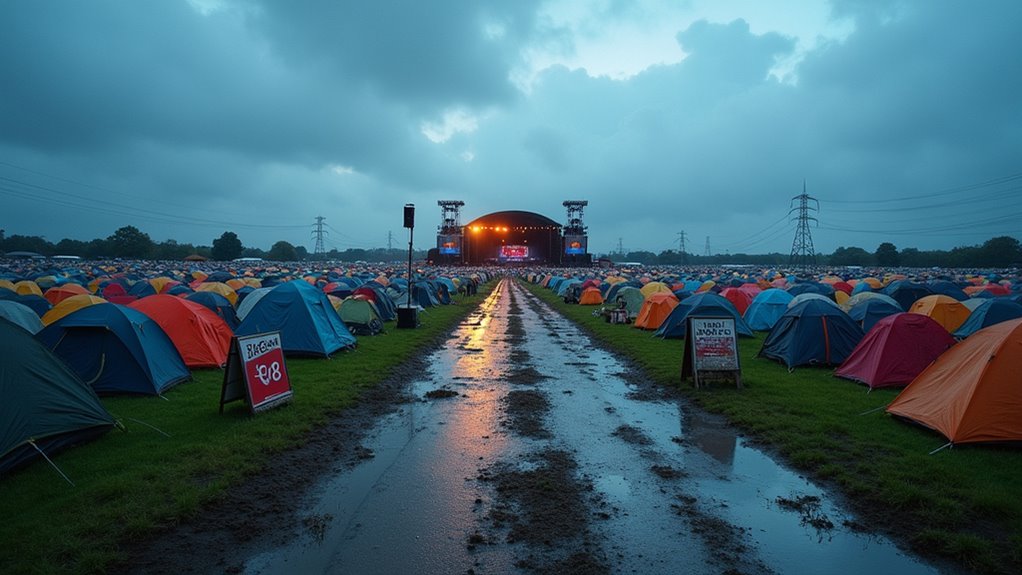

While the rest of Europe grapples with festival fatigue and oversaturation, Ireland’s music festival scene thrives with an almost defiant energy—nearly two million people flooding fields and venues annually, transforming muddy patches of countryside into temporary utopias where thirty thousand souls can forget, for a weekend at least, that they’ll never afford a mortgage.
Two million souls trading mortgage dreams for muddy fields and temporary utopia.
The paradox cuts deep: festival attendance keeps climbing while organizers hemorrhage money with the reliability of a broken faucet. One major event recently expanded capacity from 25,000 to 30,000, yet behind the scenes, promoters are drowning in spreadsheets that read like horror stories—equipment costs that would make your eyes water, security bills that rival small nations’ defense budgets, and electricity charges that somehow defy the laws of physics. The financial tightrope becomes even more precarious when you factor in that 90-95% attendance is required just to break even, leaving zero room for weather disasters or last-minute cancellations.
Young Irish festivalgoers, those self-proclaimed “world champions” of the mosh pit, treat these events as what industry insiders call “revenge spending”—a middle finger to an economy that prices them out of everything else. They’ll sleep in leaky tents and survive on overpriced chips because, honestly, what else is there? Save for a deposit on a house that costs half a million euros? Please. This demographic represents a significant slice of the projected 774,200 users expected in Ireland’s music market by 2029, their festival spending habits shaped by the same streaming-first mentality that’s reshaping the entire industry.
The Arts Council threw €14.7 million at 208 festivals in 2025, a record investment that sounds impressive until you realize it’s spread thinner than festival toilet paper. Meanwhile, corporate behemoths like Live Nation circle overhead like well-fed vultures, using their global reach and economies of scale to squeeze margins tighter than a teenager’s jeans. The pressure intensifies as festivals compete for a shrinking pool of international visitors, with the tourism crisis affecting even Ireland’s typically resilient events schedule.
What’s remarkable—or perhaps insane—is that 80% of festival programming remains free to attend, a demonstration of either admirable commitment to accessibility or economic masochism. The total music market revenue projection of $5.75 million for 2025 seems almost quaint when you consider what a single headline act demands these days.
The sector soldiers on, buoyed by experienced promoters who’ve learned to navigate this financial minefield and audiences who show up rain or shine (mostly rain, because Ireland). But make no mistake: beneath the euphoria and community spirit lies an industry walking a tightrope over an abyss of red ink.


