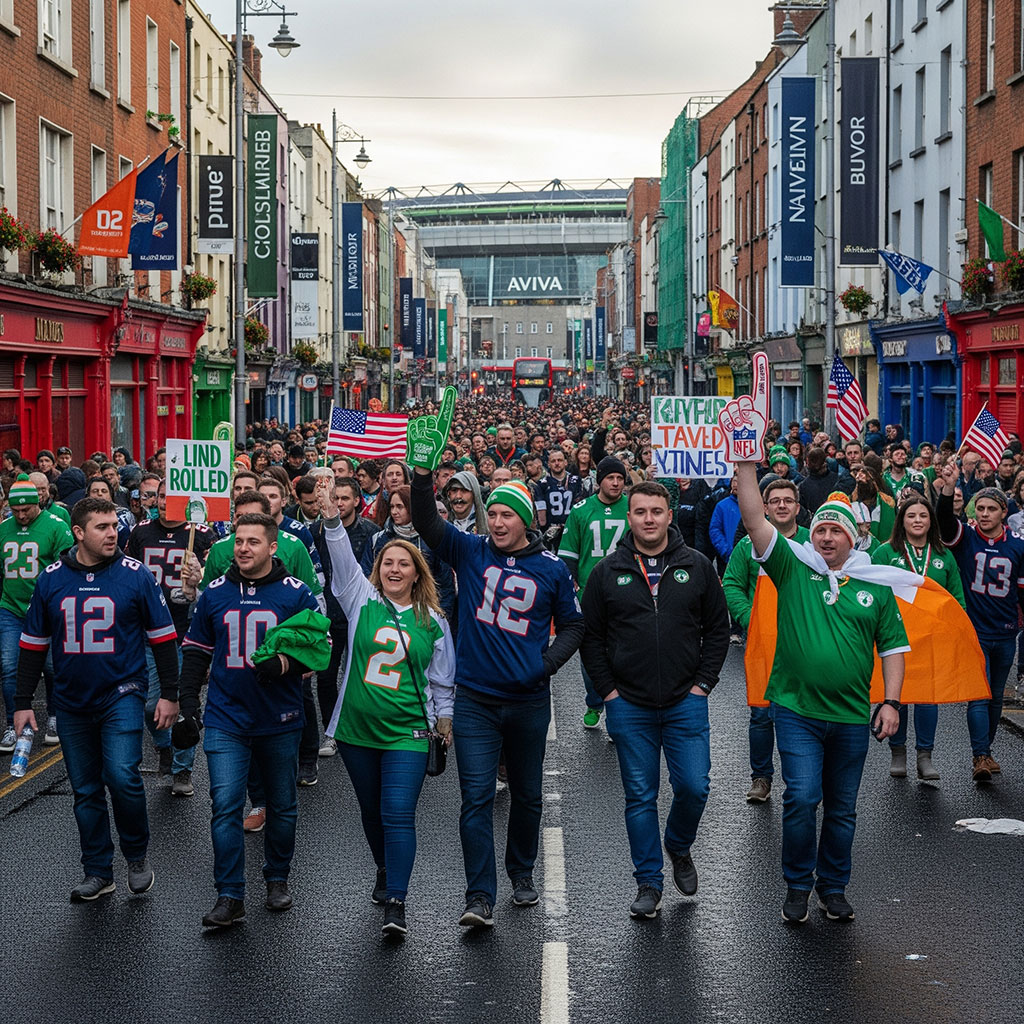

When twenty-two thousand American football fans descend on Dublin for the 2025 Aer Lingus College Football Classic, they’ll transform the Irish capital into something between a tailgate party and a cultural exchange program—complete with foam fingers, face paint, and Americans asking locals where to find the best “authentic” Irish breakfast (as if the locals eat black pudding every morning).
The Kansas State Wildcats and Iowa State Cyclones will clash at Aviva Stadium in what marks the first Big 12 Conference matchup ever held in Ireland. This isn’t just another neutral-site game; it’s the tenth college football game played on Irish soil, and undoubtedly the most competitive. Both teams rank in the top 25 nationally, and their rivalry affectionately dubbed “Farmageddon” carries enough agricultural metaphors to make even Dublin’s urban dwellers appreciate the pastoral drama.
The 48,000-seat Aviva Stadium has hosted its share of American football before, including Notre Dame-Navy matchups that traded on obvious Irish-American connections. But this game represents something different: pure Midwest rivalry transplanted across an ocean, bringing corn-fed passion to a city more accustomed to hurling matches and rugby scrums. The excitement builds toward 2025, when Croke Park will host the NFL’s first-ever regular season game in Dublin, marking a historic expansion of American football’s presence in Ireland.
The stadium’s color-coded transport routes will shepherd confused Americans clutching Leap Visitor Cards, desperately trying to navigate a public transit system that doesn’t involve rental cars and highway exits. The economic impact alone justifies the chaos, with this single game projected to pump over €130 million into the local Irish economy.
ESPN expects 4.5 million viewers back home, watching as their fellow Americans invade Temple Bar and struggle with the pronunciation of “Sláinte.” The broadcast serves dual purposes, satisfying stateside fans who couldn’t make the trip while introducing Irish viewers to the peculiar American tradition of stopping a game every three minutes for commercial breaks and strategic timeouts that seem designed primarily to sell more beer.
This spectacle builds on Ireland’s sporadic but memorable relationship with American football. The Pittsburgh Steelers played here in 1997, their Rooney family’s Irish heritage providing a convenient narrative hook.
Now, without such tidy connections, organizers rely on the sport’s growing European fanbase, a mix of expatriates, curious locals, and sports enthusiasts who appreciate any excuse to paint their faces and yell at strangers. Similar to St. Patrick’s Day revelry, the event will likely see spending surge as fans prefer social experiences over watching from home.
The event reflects the NFL’s broader strategy of global expansion, though college football’s arrival feels more organic, less corporate. These aren’t millionaire professionals but unpaid student-athletes, which somehow makes the whole enterprise feel simultaneously more authentic and more absurd.
Stewards will guide bewildered fans through Dublin’s streets, where American football culture collides with Irish hospitality in ways that nobody quite anticipated.
As Dublin prepares for this invasion, one thing becomes clear: American football’s European experiment continues evolving, one overpriced pint and mispronounced Gaelic phrase at a time. The city will survive, the fans will stumble home happy, and somewhere, an Irish grandmother will wonder why grown men need shoulder pads to play catch.