
Stretching roughly 39 to 40 kilometres through the heart of West Limerick, the Abbeyfeale and Limerick Greenway traces the bones of a 19th-century railway line, one that once hauled passengers and freight between Limerick city and Tralee before fading, like so many Irish infrastructural ambitions, into weeds and rust.
What replaced it is something quieter, slower, and arguably more honest: a well-surfaced off-road trail connecting Rathkeale, Newcastle West, and Abbeyfeale, stitched together with green waymarking signs and white arrows that actually make sense.
The route doesn’t demand heroics. Cyclists can cover it in just over three hours; walkers commit to a full ten. Shorter stages suit the day-tripper who packed optimistically and snacked aggressively. Entry points at Rathkeale’s Irish Palatine Museum and Abbeyfeale’s old railway station bookend a trail that remains open year-round, twenty-four hours, indifferent to excuses.
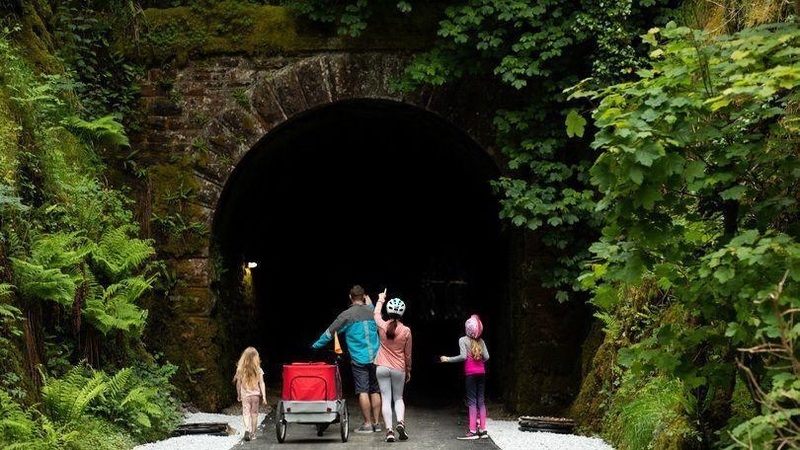
What the greenway offers in exchange for the effort is unexpectedly generous. The Barnagh Tunnel, 115 metres of restored 19th-century darkness, punctuates the landscape with the satisfying drama of a well-placed ellipsis.
The Barnagh Tunnel punctuates the landscape with the satisfying drama of a well-placed ellipsis.
Ferguson’s Viaduct, cast iron and stubborn, sits along the route like someone who refused to be demolished. Old station buildings at Ardagh, Devon Road, and Newcastle West still carry the architectural memory of a busier era, their platforms now serving runners in moisture-wicking gear rather than Edwardian commuters.
History accumulates along this trail with a kind of casual density. Norman castles, medieval abbey ruins, famine graveyards, and workhouse remnants appear beside paths edged with rivers, the Allaghaun, the Deel, the Daar, and the soft canopy of Tullig Wood.
Ardagh village carries its own particular weight: this is where the Ardagh Chalice was discovered, one of the finest examples of early medieval Irish metalwork, surfacing from a field with the timing of something deliberately theatrical.
Abbeyfeale anchors the western end. At 900 years old and sitting at the foothills of the Mullaghareirk Mountains beside the River Feale, the town wears its heritage without performing its traditional music thrives here, heritage trail plaques dot the streets, and the Glórach Theatre suggests a community that takes culture seriously. The town loop here spans 3.2 kilometres, taking in the Railway Station, Town Square, Library, and Glórach Theatre in a compact circuit that rewards the curious visitor. Each year, the town comes alive with the Fleadh by the Feale festival, a celebrated gathering that draws traditional music lovers from across Ireland and beyond.
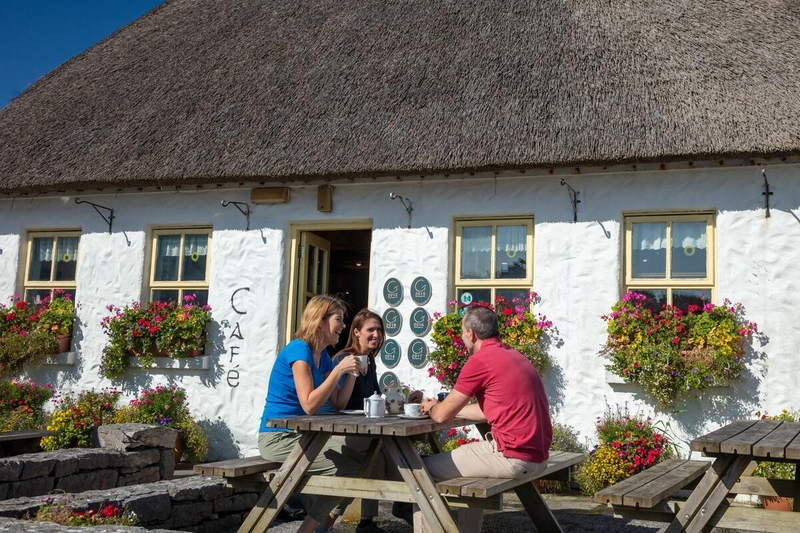
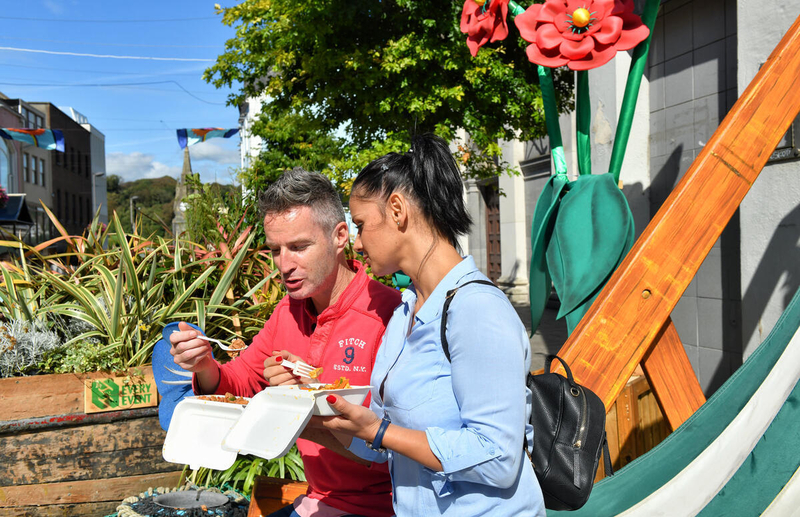
Practical needs are equally covered: the Coffee Pot, An Siopa Milseán, Leens Hotel, and various pubs and restaurants mean no one finishes the trail badly fed.
The greenway is smooth enough for all abilities, genuinely family-friendly, and designed for mobility without condescension. It doesn’t oversell itself with superlatives or manufactured wonder. Instead, it offers something increasingly rare: a route that returns more than it advertises, threading together landscape, history, and the particular satisfaction of moving slowly through a place worth looking at.
West Limerick, it turns out, had the infrastructure all along. It just needed the rust cleared away.